Finley Keller · 29 October 2026
Connections Between Social Security Adjustments and Trade Negotiation Progress in Relation to Rural Medical Service Availability
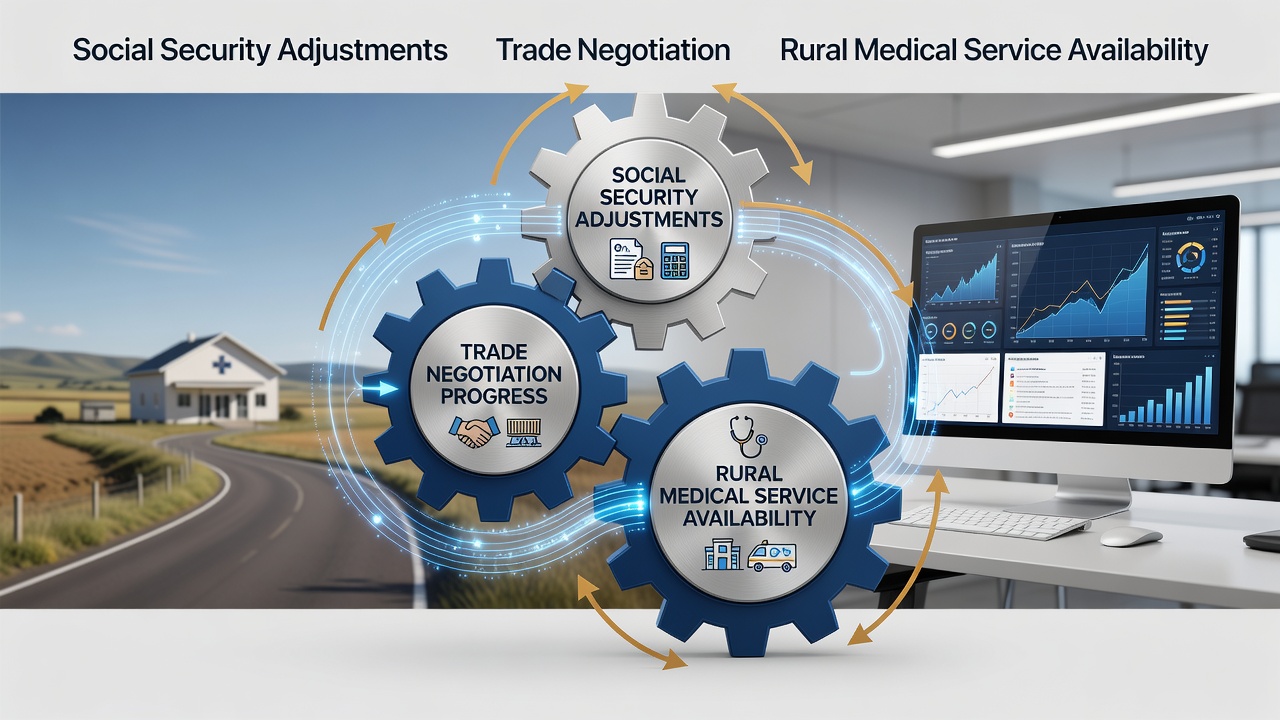
Observers note that adjustments to Social Security programs often intersect with ongoing trade negotiations in ways that shape funding streams for rural medical services, especially in regions where agricultural exports and manufacturing jobs form the economic base. Data from multiple government agencies show that cost-of-living adjustments in retirement benefits can influence local tax revenues, which in turn support clinic staffing and equipment purchases in underserved areas.
Social Security Adjustments and Their Fiscal Reach
Annual modifications to benefit levels, driven by inflation metrics and wage growth figures, alter the disposable income available to retirees in rural counties, and these shifts ripple through community health budgets because many such counties rely on property and sales taxes tied to spending patterns. Research indicates that when benefit increases align with periods of stable trade flows, rural hospitals report steadier reimbursement rates from Medicare supplements that draw on teh same fiscal pools.
Trade Negotiation Progress and Rural Economic Indicators
Progress in bilateral and multilateral trade talks frequently determines tariff rates on commodities such as grains, dairy, and machinery components, directly affecting employment levels in countryside economies that later determine the demand for both retirement support and local medical infrastructure. Figures from the World Trade Organization reveal that concluded agreements in 2025 led to measurable upticks in export volumes for certain Midwestern and Prairie provinces, prompting corresponding adjustments in regional labor markets that feed into Social Security contribution calculations.
Intersections With Rural Medical Service Availability
Trade outcomes that stabilize farm incomes can coincide with periods when Social Security trustees adjust trust-fund investment strategies, freeing resources that state and provincial governments sometimes redirect toward mobile clinics or telehealth expansions in remote zones. A case study compiled by Canadian health authorities documented how improved access to European markets for canola producers in 2024 correlated with sustained provincial grants for rural diagnostic centers during the following fiscal cycle.
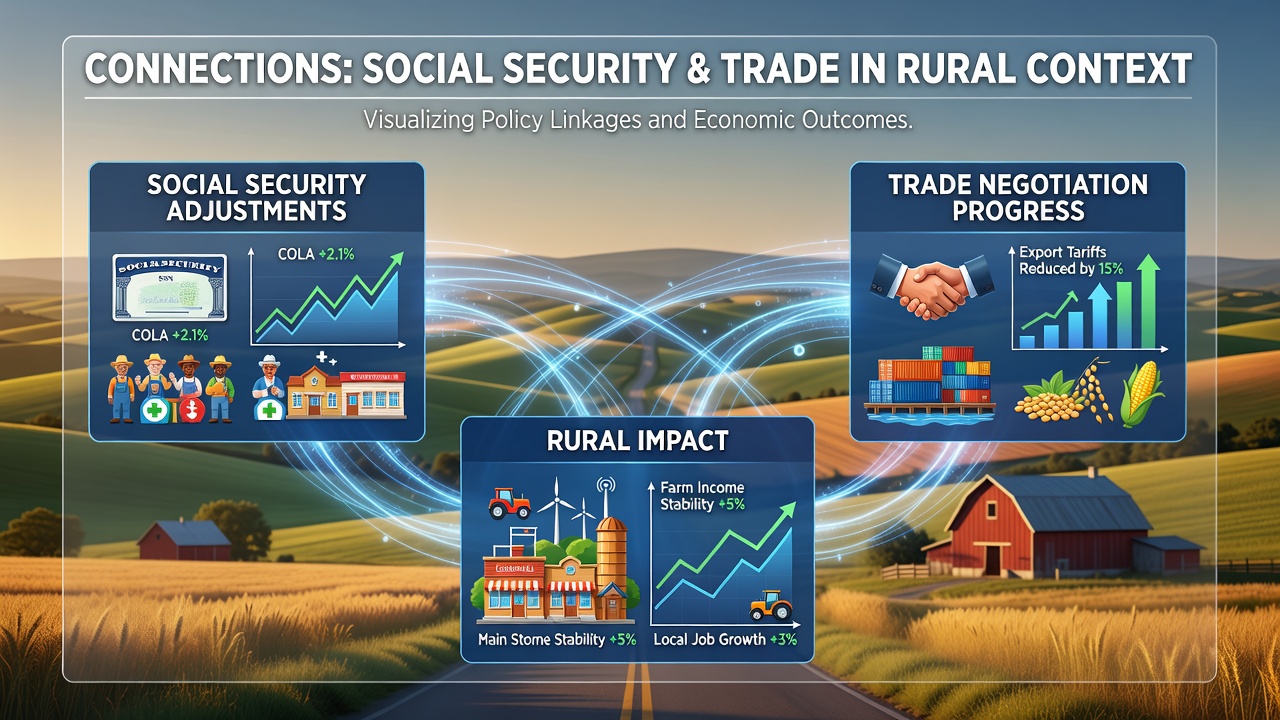
As of October 2026, several active talks involving agricultural safeguards continue to influence projected employment numbers that underpin both payroll tax receipts and the allocation formulas used by agencies overseeing rural health outreach. Evidence suggests that delays in reaching new accords have occasionally prompted temporary freezes on equipment modernization grants, while successful frameworks have unlocked supplemental funding streams that offset rising pharmaceutical costs for elderly patients reliant on Social Security income.
Policy Linkages Across Regions
Analysts at the European Commission have tracked how Common Agricultural Policy revisions tied to external trade pacts affect rural development funds that overlap with national health service delivery models in member states. Those who've examined longitudinal datasets observe that similar patterns appear in Australian regional planning documents, where adjustments to age-pension indexing occur alongside negotiations over mineral and livestock exports that sustain outback medical evacuation services. The connections become clearest when one examines county-level data showing that increases in trade-related payroll contributions often precede incremental expansions in visiting nurse programs funded partly through redirected retirement-benefit administration savings.
Conclusion
Available records demonstrate that Social Security adjustments, trade negotiation outcomes, and rural medical service capacity remain interlinked through employment statistics, tax bases, and government transfer mechanisms, with developments through October 2026 continuing to illustrate these patterns across multiple jurisdictions. Continued monitoring of these variables provides the data needed to understand resource flows in non-urban settings.