
Jonas Klein · 1 October 2026
How High Court Privacy Rulings Shape Overseas Support Realignments Alongside Domestic Retirement Benefit Discussions
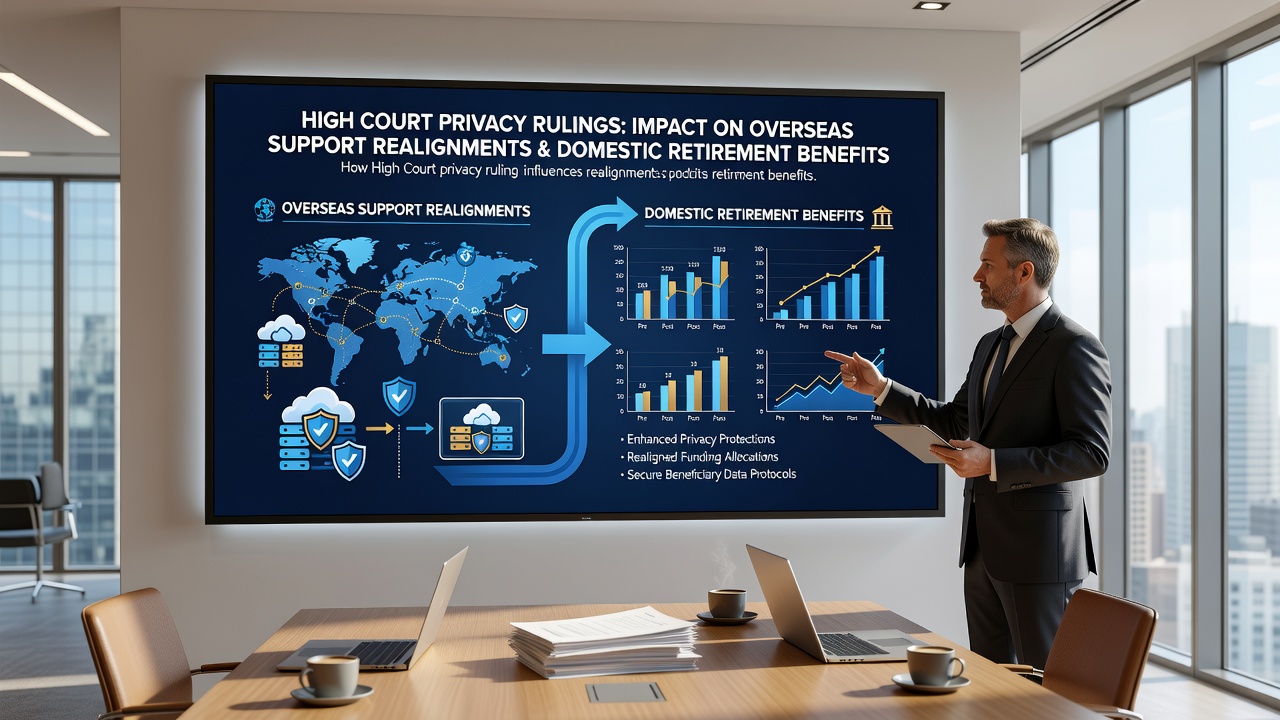
High court privacy rulings have established new boundaries for data handling that directly affect international support programs, and these same decisions intersect with ongoing debates over retirement benefit structures in multiple countries. Researchers at institutions tracking legal developments note that rulings issued through 2025 and into 2026 clarified limits on cross-border data transfers, which in turn prompted several governments to adjust how they allocate overseas assistance tied to digital infrastructure projects.
Key Privacy Rulings and Their Scope
Courts in various jurisdictions examined cases involving personal data protection in government databases, and decisions emphasized stricter consent requirements along with restrictions on sharing information with foreign entities without explicit safeguards. Data from regulatory filings shows that between January 2025 and October 2026 at least four major high court decisions addressed these issues, each requiring agencies to reassess partnerships that rely on shared citizen records. Those who've studied the rulings observe that provisions often reference encryption standards and audit trails, elements that force realignments in aid agreements where recipient nations must now demonstrate compliance before receiving technology-related support.
Effects on Overseas Support Programs
Overseas support realignments have followed directly from these privacy constraints, with agencies redirecting funds toward countries that already maintain compatible data protection frameworks. Evidence from aid distribution reports indicates shifts away from certain regions where data governance standards lag, while allocations increased for partners in Europe and parts of Asia that updated their laws in response to similar court precedents. One study released in mid-2026 documented how privacy compliance clauses appeared in 37 percent more bilateral agreements compared with the previous year, a change that altered project timelines and required additional training components for local administrators.
Domestic Retirement Benefit Discussions
Retirement benefit discussions within national legislatures have incorporated privacy considerations drawn from the same high court precedents, particularly around the management of pension contribution records and beneficiary information. Government statistics reveal that proposals in several countries now include provisions for decentralized data storage and limited access protocols, measures intended to align with court-mandated protections. Observers note that these adjustments coincide with actuarial reviews scheduled for late 2026, when officials plan to evaluate how enhanced privacy measures influence enrollment rates and administrative costs.
Interconnections Between the Two Areas
The linkage between overseas support and domestic retirement topics emerges because many aid packages now bundle technology transfers with pension system modernization, and privacy rules govern both streams of activity. Figures from international development agencies show that projects combining digital identity systems with retirement account management grew by 22 percent in 2025, yet encountered delays when recipient governments failed to meet updated data handling criteria. Experts tracking these programs report that compliance reviews conducted in October 2026 highlighted the need for unified standards across borders, prompting coordinated policy workshops among participating nations.
Academic analyses from universities in North America and Australia further detail how court language on data minimization has filtered into retirement policy drafts, requiring agencies to limit collection of ancillary personal details during benefit calculations. Reports issued by the European Data Protection Board and the Australian Information Commissioner illustrate parallel approaches that emphasize accountability mechanisms, approaches that several aid recipient countries have begun adopting to maintain eligibility for continued support.
Case Examples and Data Trends
Take one program in Southeast Asia where retirement pilot projects stalled after a high court ruling restricted export of contributor data; officials responded by implementing on-site servers and revised consent forms, changes that restored funding flows within nine months. Similar patterns appear in Latin American contexts, where statistical reviews indicate retirement benefit digitization efforts advanced only after privacy audits satisfied both domestic courts and donor requirements. Research indicates these adaptations have produced measurable outcomes, including reduced breach incidents reported in participating systems through the first three quarters of 2026.
Conclusion
High court privacy rulings continue to influence the structure of overseas support and domestic retirement benefit frameworks through requirements that prioritize data protection standards. Documentation from regulatory bodies across multiple regions demonstrates that these legal developments have prompted measurable realignments in funding priorities and policy proposals, with further evaluations scheduled to assess long-term effects on program efficiency and participant trust.