Finley Keller · 17 September 2026
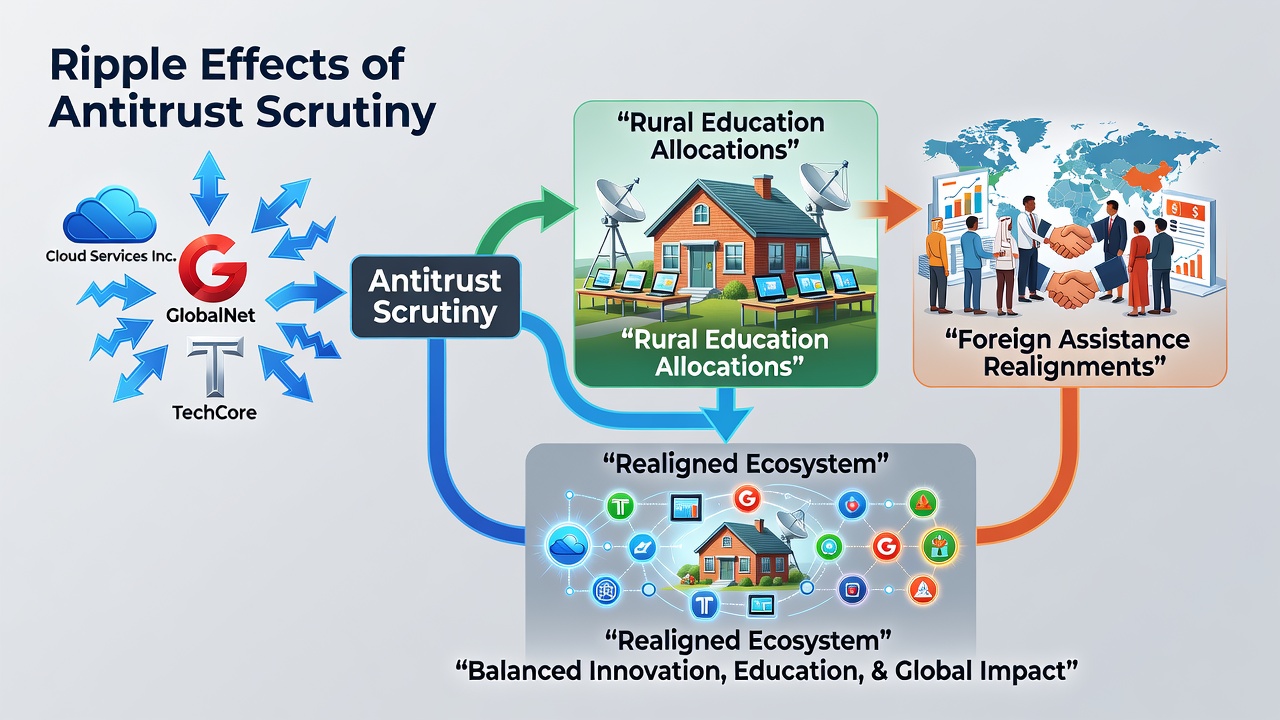
Ripple Effects of Antitrust Scrutiny on Tech Giants and Their Ties to Rural Education Allocations Plus Foreign Assistance Realignments
Antitrust scrutiny on major technology companies has intensified across multiple jurisdictions since the early 2020s, with regulators examining market dominance in search, advertising, cloud services, and mobile ecosystems. These investigations often result in fines, mandated structural changes, and settlement agreements that redirect corporate resources into public funds, and observers note how such reallocations intersect with domestic education budgets and international development programs. Data from the European Commission shows that penalties against companies like Google and Apple have exceeded 10 billion euros in recent cases, while similar actions by the US Federal Trade Commission have produced settlements valued in the hundreds of millions.
Antitrust Cases and Settlement Mechanisms
Regulatory bodies in the United States, the European Union, and Australia have pursued parallel cases against the same set of firms, creating overlapping compliance requirements that alter how these companies manage cash reserves and philanthropic commitments. The Australian Competition and Consumer Commission documented several proceedings involving digital platforms in 2025, and those rulings required ongoing reporting on market practices that previously escaped detailed oversight. When settlements occur, portions of the funds flow into government treasuries rather than remaining under corporate control, and this shift changes the available pool for targeted allocations such as rural infrastructure projects.
One study from a Canadian research institute revealed that repeated legal costs and required divestitures reduce discretionary spending by technology firms on external partnerships, including education initiatives that once received direct grants. Yet the same data indicates that governments sometimes earmark recovered penalties for specific domestic priorities, creating indirect links between enforcement outcomes and budget lines for schools in less densely populated regions.
Connections to Rural Education Funding Streams
Rural education allocations in several countries have historically drawn partial support from corporate tax contributions and settlement revenues, and antitrust resolutions have begun to influence those streams. When a large technology firm agrees to structural remedies or pays substantial penalties, the resulting revenue can supplement state or federal education accounts that support broadband expansion and teacher training programs in remote districts. Figures released by the US Department of Education show modest increases in certain rural grant programs during periods when major settlements were finalized, although causation remains difficult to isolate from broader fiscal policy shifts.
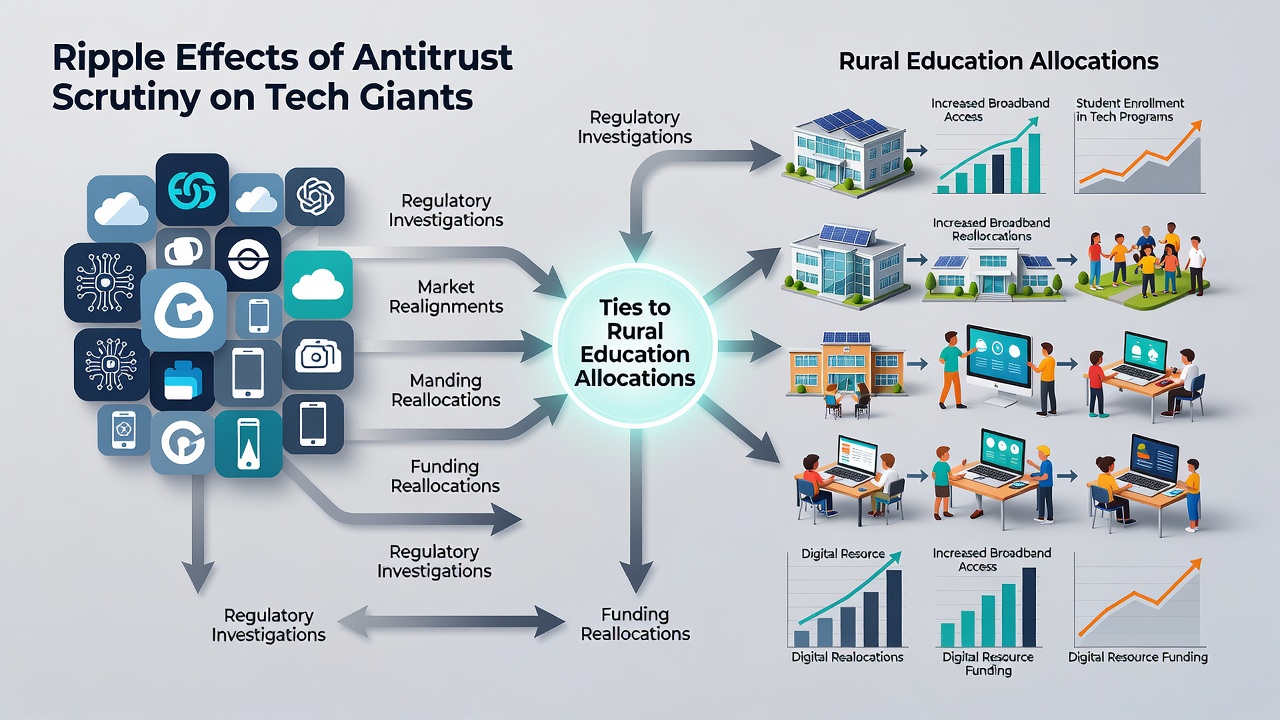
Researchers tracking these patterns have observed that companies facing prolonged litigation often scale back voluntary community investments while litigation continues, and this contraction can temporarily reduce supplemental resources for rural districts that previously relied on private donations. At the same time, the regulatory pressure encourages some firms to demonstrate public benefit through new partnerships, and those arrangements sometimes include commitments to supply devices or connectivity services to underserved schools. Evidence from European member states suggests similar dynamics, where competition authorities have required transparency reports that incidentally highlight corporate spending on educational access projects.
Foreign Assistance Realignments and Global Operations
Tech giants maintain extensive international operations that intersect with foreign assistance frameworks, and antitrust outcomes can prompt adjustments in how those firms engage with development programs abroad. When regulatory actions constrain revenue growth or force changes in business models, companies may revise their overseas investment strategies, including contributions channeled through corporate foundations or direct partnerships with aid agencies. Reports from the Organisation for Economic Co-operation and Development indicate that private sector flows to developing regions have fluctuated in tandem with enforcement timelines in home markets.
Realignments appear most clearly in sectors such as digital infrastructure and skills training, where technology companies have previously supplied equipment and expertise under public-private agreements. After certain high-profile cases concluded with large settlements, some firms redirected portions of their remaining discretionary budgets toward initiatives that align with new compliance priorities rather than standalone philanthropic efforts. Observers tracking these movements note that foreign assistance budgets administered by governments can absorb redirected corporate resources when settlement agreements include provisions for international development components.
September 2026 Developments and Ongoing Monitoring
In September 2026 several pending cases are scheduled for status updates before US district courts and the European General Court, and analysts expect those proceedings to clarify how remaining settlement funds will be distributed across education and development accounts. Government agencies in multiple countries continue to publish quarterly reports that track both the direct financial impacts of antitrust actions and any secondary effects on rural school connectivity grants and foreign aid disbursements. These updates provide concrete data points for researchers examining whether enforcement activity produces measurable changes in funding stability for the affected sectors.
Conclusion
The interplay between antitrust enforcement, corporate resource allocation, and public spending categories continues to evolve as regulators finalize remedies and monitor compliance. Settlement revenues and altered investment patterns create measurable shifts in the financial landscape that supports rural education programs and foreign assistance initiatives, even when the connections remain indirect. Continued documentation from regulatory bodies and academic researchers will supply the data needed to assess the scale and persistence of these ripple effects over the coming years.